

Why Mental Health Is the Secret to Keeping a Job

Every October, the country marks National Disability Employment Awareness Month (NDEAM).
This year's theme, "Celebrating Value and Talent," reminds us what people with disabilities bring to the workplace every day.
Here in Illinois, we still have a long way to go. Our state has long ranked near the bottom of the country for disability employment. That tells us something important: simply matching a person to a job opening isn't enough. A job that lasts needs a stronger foundation.
At Ray Graham Association (RGA), our Employment team knows that our services have to go far beyond soft skills, interview practice, and standard job training. We start by sitting down with every single person to get to know them as a unique individual—understanding their innate abilities and personal passions. By providing people with the autonomy to pick and choose an ideal job that actually aligns with their interests, we set them up for long-term success and meaning.
A critical piece of that lasting foundation is holistic support.
Mental health and meaningful employment are deeply intertwined; together, they empower people to build confidence, achieve independence, and lead fulfilling lives. Having professionals on both sides of that connection is what makes RGA's approach different. Much of that work happens in coordination with RGA's Emerge Behavioral Health Clinic.
Feeling Well Helps People Work Well
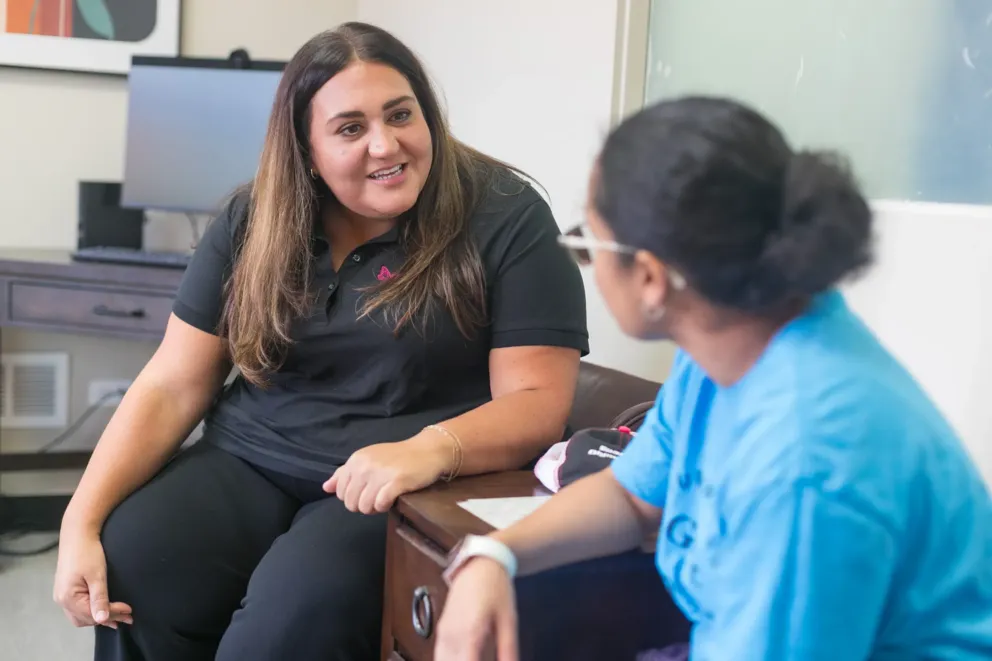
People with intellectual and developmental disabilities (I/DD) have mental health conditions at three to four times the rate of the general public.
Too often, doctors and counselors miss it. "Diagnostic overshadowing" is when a provider sees someone's disability and assumes it explains everything. Real distress gets written off as "just part of their disability," and the person never gets the care they need.
At work, that gap can show up fast. Anxiety can make an interview feel impossible. A manager's critical feedback can feel like a crisis. People lose jobs because no one addressed what was going on underneath, not because they lack talent or value.
Furthermore, a job isn't static. People need support navigating the evolving seasons of work—whether that means adapting to a change in leadership, managing new job pressures, or handling a seasonal rush. Working at a retail store like HomeGoods in July is a very different experience than navigating the holiday chaos of December.
That's where Emerge comes in. Processing personal hardships alongside professional stressors is a skill our clinic is uniquely designed to facilitate. Our licensed clinicians specialize in supporting people with I/DD, so no one has to explain their disability before they can talk about how they feel.
Sessions are shaped around how each person thinks, learns, and communicates so they can build the coping skills necessary to weather tough moments on the clock. With those tools, Emerge helps people feel steady today so they can build careers that last.
What a Real Job Does for a Person
The other side of the loop matters just as much: a steady job is fundamentally good for mental well-being.
For decades, many people with disabilities were placed in jobs that paid less than minimum wage, often kept apart from everyone else. RGA was a leader in changing this narrative, long advocating for Competitive Integrated Employment (CIE), which means real jobs in real workplaces at fair pay.
When someone lands that kind of job, the difference shows.
- A daily routine brings calm and structure.
- Coworkers become friends.
- A fair paycheck means making your own choices about how you live.
Most of all, work builds pride. When an employer sees someone's talent and says so, confidence grows. An earned paycheck says, plainly, that you are valued.
Two Teams, One Goal
In the last fiscal year alone, we successfully placed people into competitive roles averaging 25 hours a week at wages up to $16 per hour, all while partnering with 35 new employers. Our job coaches and Emerge clinicians work side by side, ensuring each person receives support for every aspect of their life, not just their time on the job.